
Last updated November 23, 2026
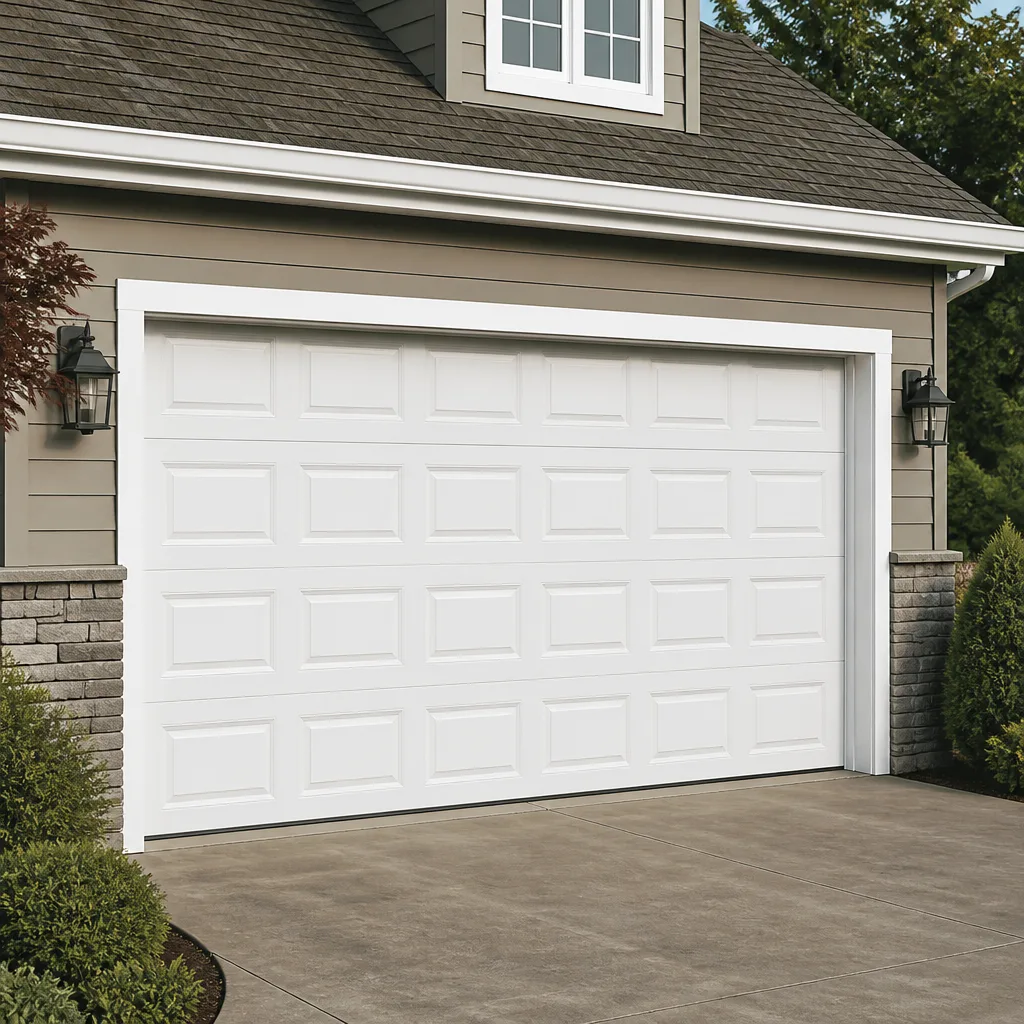 Raised-panel steel
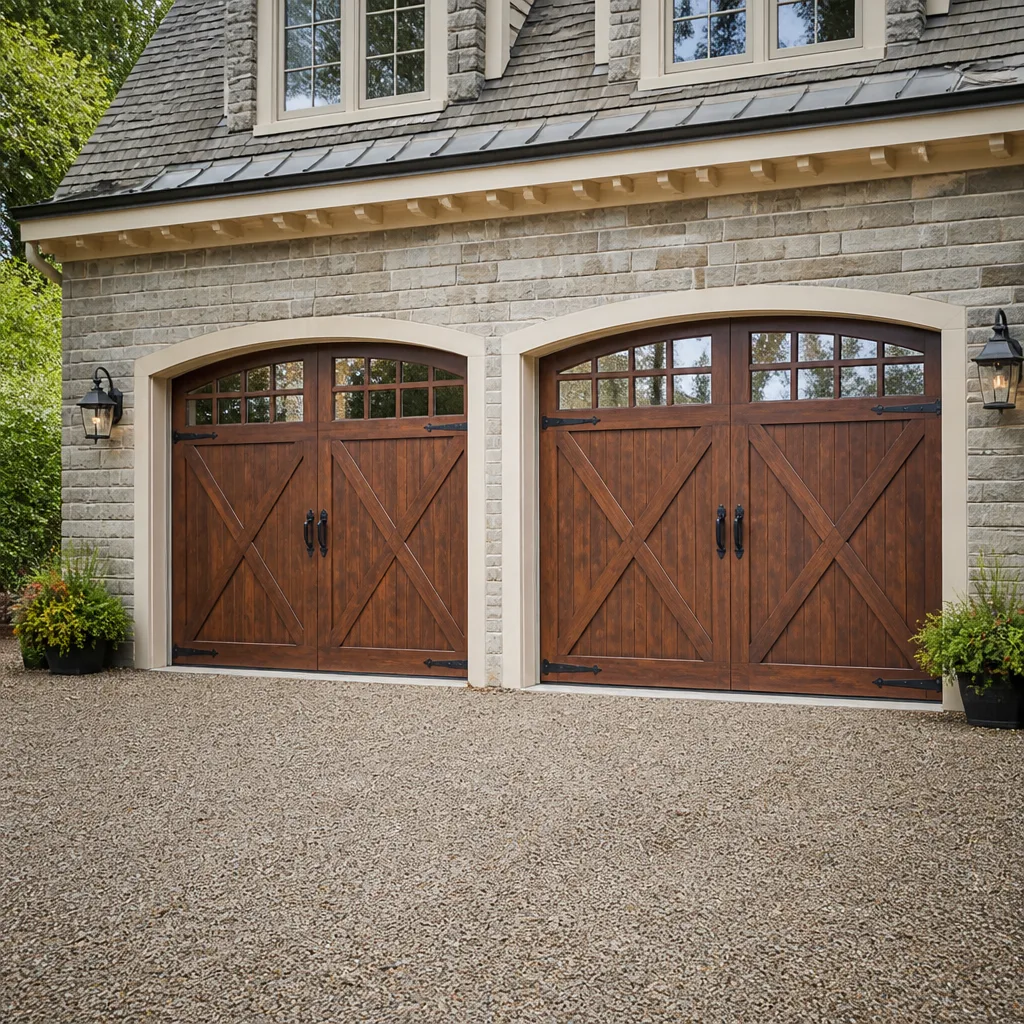 Carriage house
 Modern flush
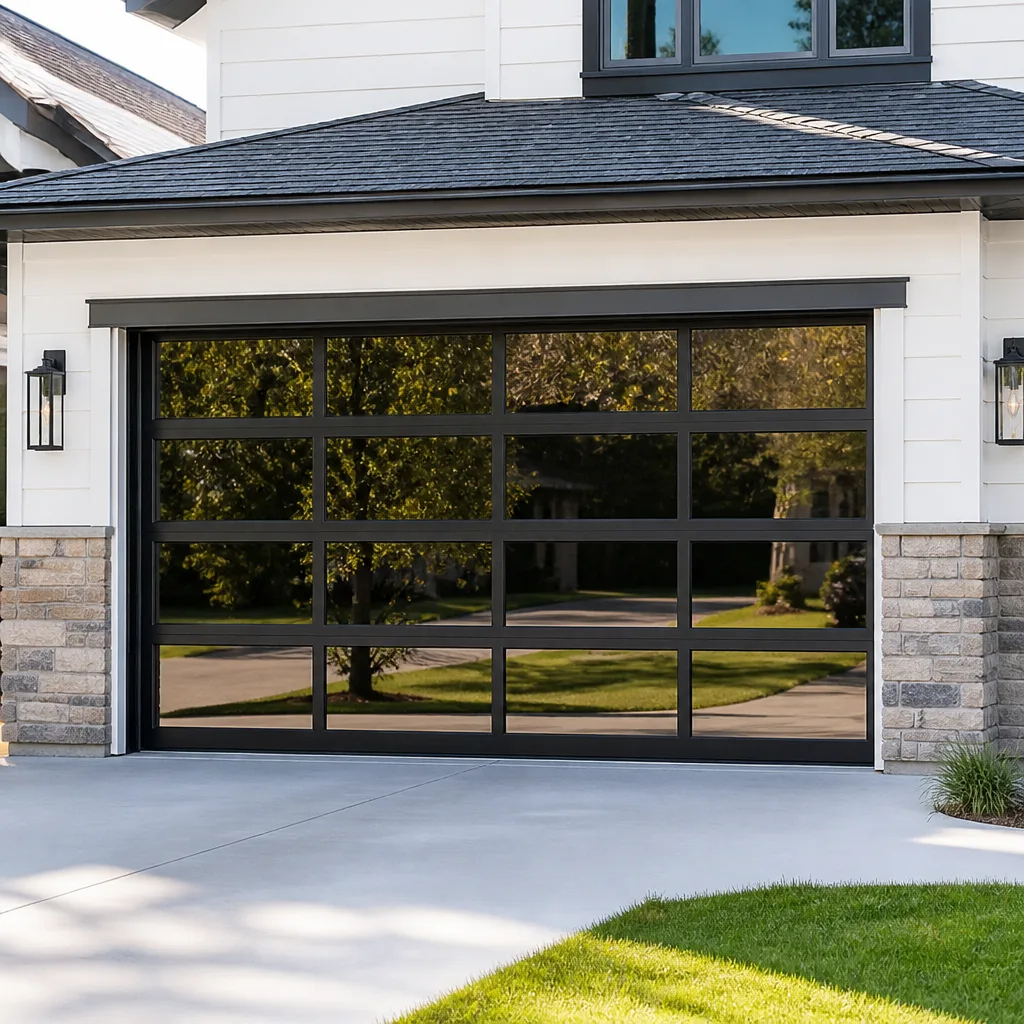 Full-view glass
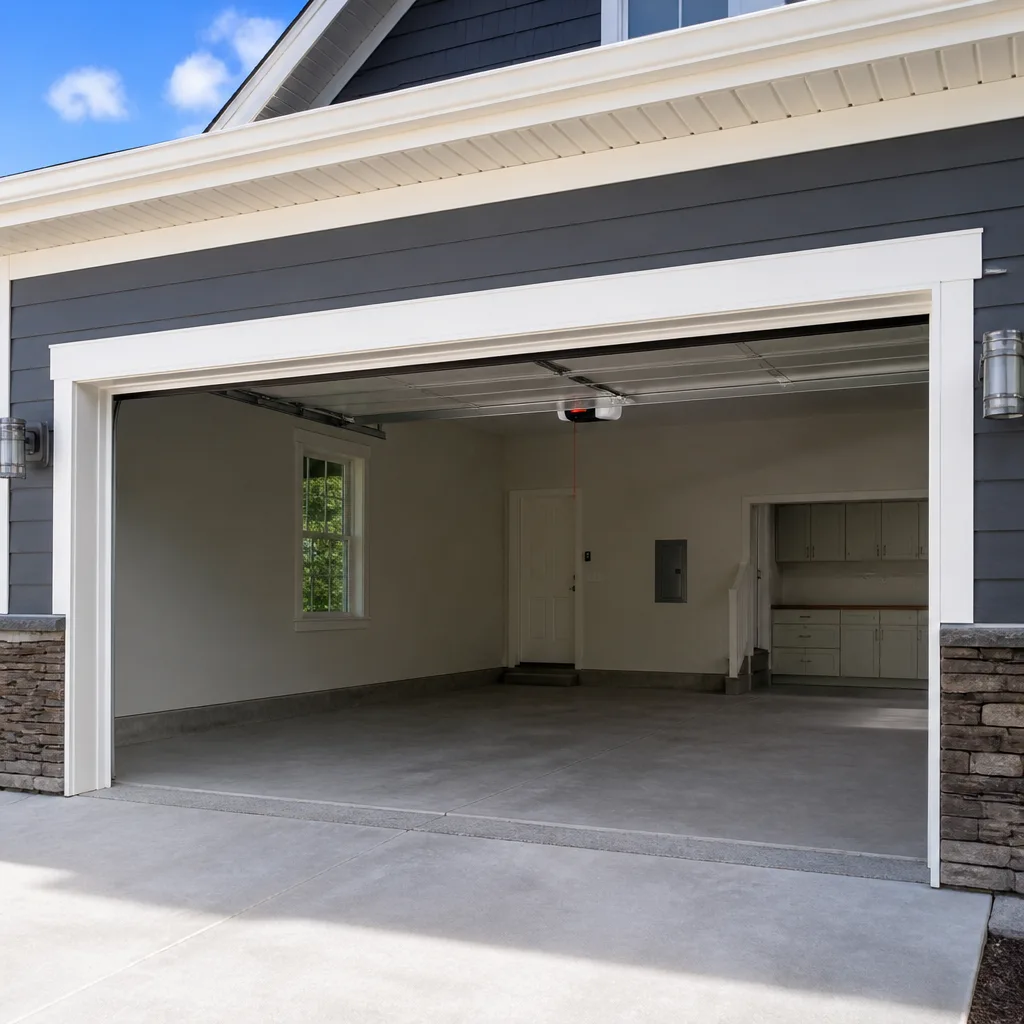 LiftMaster openers
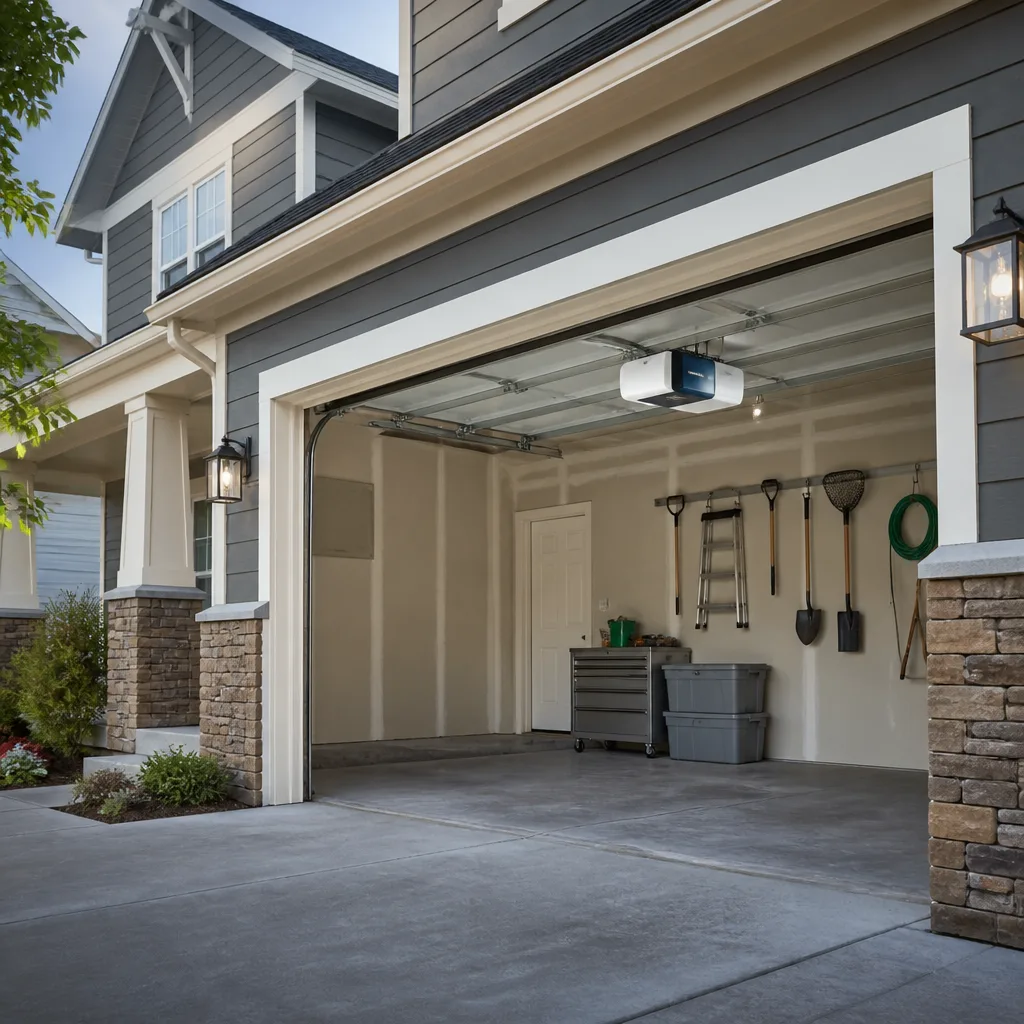 Chamberlain openers
Full 25-point door and opener safety check with every visit - springs, cables, rollers, tracks, and your LiftMaster or Chamberlain opener included
You get a price before we start. It does not change when the pro arrives.
Get your free estimateGarage Door Repair Maintenance Checklist for Gaithersburg Homeowners
Most garage door advice ignores the calendar. That’s the mistake. A checklist copied from a national site tells you to lubricate twice a year and call it done, which sounds reasonable until you realize a Gaithersburg door lives through a very different year than one in Phoenix or Miami. Our winters swing above and below freezing for weeks, which means the metal in your tracks and springs expands and contracts constantly while the humidity of a Maryland summer works on every seal and hinge. Skipping lubrication before a cold snap isn’t a small oversight – a dry hinge can bind and snap a cable in the same week your springs are already carrying maximum tension. This guide breaks maintenance into seasons that match how your door actually lives here, tells you which parts fail first, and draws a hard line between what you can safely do yourself and what belongs to a trained technician.
Quick Answer
A garage door maintenance checklist for Gaithersburg should be organized around the local year: lubricate moving metal parts before the first freeze, check seals and track hardware in spring after road salt and meltwater have done their work, tighten fasteners and test the balance and safety reverse in summer, and inspect springs and cables again before winter. Homeowners can safely handle lubrication, visual inspection, and the balance and reverse tests. Springs, cables, and any track or opener repair belong to a trained professional.
Styles & brands we work with
- Raised-panel steel
- Carriage house
- Modern flush
- Full-view glass
- LiftMaster openers
- Chamberlain openers
Table of Contents
- Why Timing Matters More Than the Task List in Gaithersburg
- The Seasonal Maintenance Calendar
- Which Parts Fail First on Doors Over 10 Years Old
- How to Run a Proper Balance Test
- What Maryland Road Salt Does to Seals and Track Hardware
- DIY-Safe Tasks vs. Professional-Only Work
- Checking Your Opener the Right Way
- Common Mistakes to Avoid
Why Timing Matters More Than the Task List in Gaithersburg
The same lubrication job done in July and done in November produces very different results. Metal responds to temperature. In a Gaithersburg January, the steel in your tracks, hinges, and spring coils contracts, clearances tighten, and grease that has gone stiff does far less work than grease applied while it was warm. That’s why the order of your checklist matters as much as the items on it.
This area sits in a humid continental pattern, which means three distinct stresses stack up across a single year. Winter freeze-thaw cycles push moisture into every seam and then expand it. Spring thaw and rain send road salt runoff toward the bottom of your door, where the seal and the lowest hinges sit closest to the pavement. Summer humidity softens seals, works on painted steel, and makes wooden or composite panels swell and shift. Add the pollen and grit that blow across the neighborhoods around Olde Towne, Kentlands, and Quince Orchard, and you have a door that needs attention at specific points on the calendar rather than a vague twice-a-year reminder.
Our technicians have up to 12 years of experience, and the pattern we see is consistent: doors that get maintained on a seasonal rhythm last noticeably longer between major repairs than doors that only get looked at when something breaks. The checklist below is built around that rhythm. It’s also built around the reality that most Gaithersburg homeowners use their garage as the main way in and out of the house, so a door that’s down for days isn’t a minor annoyance.
The Seasonal Maintenance Calendar
Treat each season as its own set of tasks. The list below is the one we walk through, and it’s ordered so that each step builds on the last. If you only do one thing per season, do the bolded item for that season.
Fall (before the first hard freeze)
- Lubricate hinges, rollers, and the torsion spring coils with a garage-door-specific lubricant. This is the most important task of the year in Gaithersburg, because cold stiffens anything that’s dry.
- Wipe the tracks clean with a damp cloth – no grease in the tracks themselves, just clean and dry.
- Test the balance of the door by hand (steps in the balance section below).
- Check the weather seal along the bottom for cracks and flattening before freeze-thaw starts widening them.
- Test the safety reverse on the opener.
Winter (inspect, don’t overhaul)
Cold is not the time for big adjustments. Do a visual walk-around: look for cracked hinges, frayed cable strands at the drum, and any ice or debris packed in the tracks. Keep the bottom seal clear of snow and ice so it doesn’t freeze to the floor and tear when the door lifts. If the door sounds different – grinding, popping, a slow drag – note it and book a technician rather than pushing through until spring.
Spring (recover from winter)
- Rinse the bottom seal and the lower track with fresh water to dilute road salt residue.
- Check bolts and lag screws on the hinges, tracks, and opener brackets and tighten any that have loosened over the freeze-thaw season.
- Re-test the balance and the safety reverse.
- Look closely at the bottom panel for rust along the seams where salt water collects.
Summer (heat and humidity work)
- Re-lubricate moving parts – the fall application has had a hard winter.
- Clean and lubricate the opener’s chain or belt according to the opener brand’s guidance.
- Check the rollers for flat spots or cracks; heat and constant use wear them fastest now.
- Look at painted steel panels for bubbling or chalking, especially on south- and west-facing doors.
Which Parts Fail First on Doors Over 10 Years Old
Not every component ages at the same rate. Knowing which ones are on the clock helps you decide whether to repair or plan ahead, and it stops you from paying for a full replacement when one part is the actual problem.
Fail first (often between 7 and 12 years):
- Torsion and extension springs. These carry the full weight of the door through thousands of cycles. Spring fatigue is the single most common failure we see on doors past the 10-year mark, and it’s a safety-critical part that many general handymen won’t touch.
- Rollers. Steel rollers wear and nylon rollers crack. A door that shudders or squeals is usually telling you about rollers.
- Cables. Cables fray where they wind on the drum. A single broken strand is a warning, not a nuisance.
- Bottom weather seal. The seal takes the most abuse of any part – salt, water, sun, and repeated compression.
- Opener drive gear and logic board. On LiftMaster, Chamberlain, and Craftsman units the mechanical wear shows up as jerky travel or a door that reverses for no clear reason.
Last longer (often 15 to 20+ years with care):
- Sectional steel panels, if the paint is maintained and rust is caught early.
- The main track and header brackets, on doors that haven’t been hit.
- Hinges, though the ones at the bottom of the door age faster than the ones at the top because of moisture and salt exposure.
- Opener rails and the motor itself, provided the drive components are kept clean.
This is why brand matters in diagnosis. A Raynor door and a Clopay door of the same age won’t necessarily fail the same way, and the opener on top of either will behave according to its own logic. When we diagnose, we work from the specific brand – LiftMaster, Chamberlain, Genie, Clopay, Amarr, Wayne Dalton, Craftsman, or Raynor – because the failure patterns are different, and so is the right fix. If you’d rather skip the guessing, garage door repair from a specialist who knows your brand saves you the diagnostic learning curve.
How to Run a Proper Balance Test
An out-of-balance door rarely announces itself as a balance problem. It shows up first as a door that’s harder to lift, one that drifts down a few inches after you let go, or an opener that seems to strain on the way up. Long before it becomes an emergency, a failing spring is quietly loading your opener with weight it wasn’t built to lift. Catching it here is one of the most valuable things you can do on this whole checklist.
Here’s the test, and it’s safe to run by hand with the door closed and the opener disengaged:
- Disconnect the opener. Pull the manual release cord so the door moves freely on its tracks. Never test balance with the opener engaged – you’ll get a false reading and stress the motor.
- Lift the door to about halfway and stop. Use the handle or the bottom edge, and keep your hands flat.
- Let go. A balanced door holds roughly where you left it, or drifts only slightly. A door that sinks toward the floor or rises on its own is out of balance.
- Repeat at a few heights. Try about a quarter open, halfway, and three-quarters open to see where it drifts most.
- Reconnect the opener when you’re done, and run it through one full open-close cycle to confirm the travel is smooth.
An out-of-balance door feels “heavier on one side” or “springy” near the top. If it takes real effort to lift to halfway, or it drops fast when you let go, stop testing and book a technician. Do not start adjusting the springs to correct what you found – that’s covered below.
The opener matters here too. Once the balance test is done, run the door and listen. If a LiftMaster or Chamberlain unit reverses for no reason or feels labored, the tension could be pulling it out of its normal cycle. A garage door opener repair visit can check both together, which saves you from fixing one and discovering the other a week later.
What Maryland Road Salt Does to Seals and Track Hardware
Gaithersburg roads get treated through the winter, and that treatment ends up on your garage floor. Meltwater carries road salt off your car, off the driveway, and off nearby streets, and it pools at the lowest point of the door: the bottom seal and the bottom hinges. Left alone over a winter, salt residue dries into a crust that grabs and tears the rubber, works into the seams of the bottom panel, and accelerates corrosion on the hinge plates and track hardware.
The practical effects show up a season or two later:
- The bottom seal flattens, cracks, and stops sealing, letting cold air, water, and small pests in.
- The lowest hinge and its rivets corrode faster than any other hinge on the door.
- The bottom of the track pits and roughens, which makes the rollers drag and the door run louder.
- The bottom panel rusts along the seam where water sat, which is the most expensive panel to replace.
The fix is simple and doesn’t require any special equipment. Once the weather turns and the salt is no longer being laid down, rinse the bottom seal, the bottom panel, and the lower few feet of the track with fresh water. Dry them off, and check the seal for cracks while you’re there. If the seal is already torn or hardened, replacing it is a low-cost task that protects the panel above it. If the bottom panel has already started to rust through, a Gaithersburg Garage Door Repair Pros specialist can tell you whether repairing the panel or replacing the bottom section is the better call. Salt damage is cumulative, so the earlier you catch it, the cheaper it stays.
DIY-Safe Tasks vs. Professional-Only Work
Most homeowners can safely do about half of this checklist. The other half involves parts that store enough energy to cause serious injury, and no amount of YouTube familiarity changes that. Here’s the clear line.
DIY-safe:
- Lubricating hinges, rollers, and springs with a proper garage-door lubricant (applied to the coils, not disassembled).
- Wiping and rinsing tracks, seals, and lower panels.
- Tightening bolts and lag screws that are visibly loose.
- Running the balance test and the safety reverse test on the opener.
- Replacing the bottom weather seal on most standard doors (with the door fully closed).
- Cleaning and lubricating the opener’s chain or belt per the brand’s instructions.
Professional-only:
- Any spring adjustment or replacement. Torsion and extension springs are under enormous tension and can release suddenly. This is the single most dangerous part of a garage door system, and it’s why many general handymen decline the work.
- Cable replacement or adjustment.
- Track straightening or realignment after a hit or a hard close.
- Panel replacement on a sectional door, since the panel carries structural tension.
- Opener logic board or drive gear replacement.
- Any repair that requires the door to be held open without the opener.
Spring repair is a genuine specialty, and it’s the job we most often get called to after a homeowner has tried something else. If your balance test suggests a spring is failing, don’t try to correct it yourself – a garage door spring repair visit handles it safely the first time, and it’s the difference between a repaired door and a hospital trip.
Checking Your Opener the Right Way
Your opener is a machine with its own service life, and it deserves more than a glance. A proper opener check takes five minutes and catches the small issues before they strand the door.
- Test the safety reverse. Put a small object – a piece of wood or a box – on the floor in the door’s path and close the door. The door should reverse on contact. If it doesn’t, that’s a stop-and-call item, not a “get to it later” item.
- Test the photo-eye sensors. With the door open, wave an object through the beam at the bottom corners. The door should reverse if it’s closing. Wipe the lenses while you’re there; dust and pollen block them more often than actual failure.
- Listen to the cycle. A rhythmic squeal points to the chain or belt. A grind points to the drive gear. A click with no movement often means the logic board. Each brand has its own tell – a Genie and a Craftsman don’t fail the same way, and diagnosing by brand saves a return visit.
- Check the force setting. If the door hesitates partway up, the opener may be working harder than it should because the door is out of balance. Fix the door and the opener symptoms often go away.
- Look at the manual release. Make sure the cord is reachable and the release works smoothly with the door closed.
When an opener issue isn’t obvious, the one-call advantage matters. We handle opener electronics, spring systems, and panels as a single job, so you’re not coordinating between a door company and an electrician. A failing LiftMaster unit and a tired torsion spring get looked at together and priced together.
Common Mistakes to Avoid
- Lubricating the tracks. The tracks should be clean and dry – grease attracts grit and makes the rollers drag. Lubricate the rollers and hinges, never the track surface itself.
- Using WD-40 or motor oil as a garage-door lubricant. These are not a substitute for a garage-door-specific lubricant. They can attract dust or dry out, and in a Maryland winter they do more harm than good.
- Skipping the fall lubrication because the door “feels fine.” Cold is what turns a dry hinge into a snapping cable. Fall is the one season a Gaithersburg homeowner shouldn’t skip, because it’s the last window before freeze-thaw starts.
- Trying to adjust springs yourself. This is the most serious mistake on the list. Springs are under high tension, and there isn’t a safe way to work on them without proper tools and training. Call a professional.
- Pushing through a balance issue until the opener dies. A door that’s out of balance quietly overloads the opener motor and drive gear. Fixing the balance first saves the opener and often saves the door.
- Ignoring the bottom seal after winter. That flat, cracked strip is your door’s first line of defense against road salt and moisture, and it’s cheap to replace. Wait too long and the bottom panel is the one that rusts through.
- Assuming a noisy door needs a new one. A shudder, squeal, or rattle is usually a roller or hinge issue, not a door at end of life. Get a diagnosis before you price a replacement.
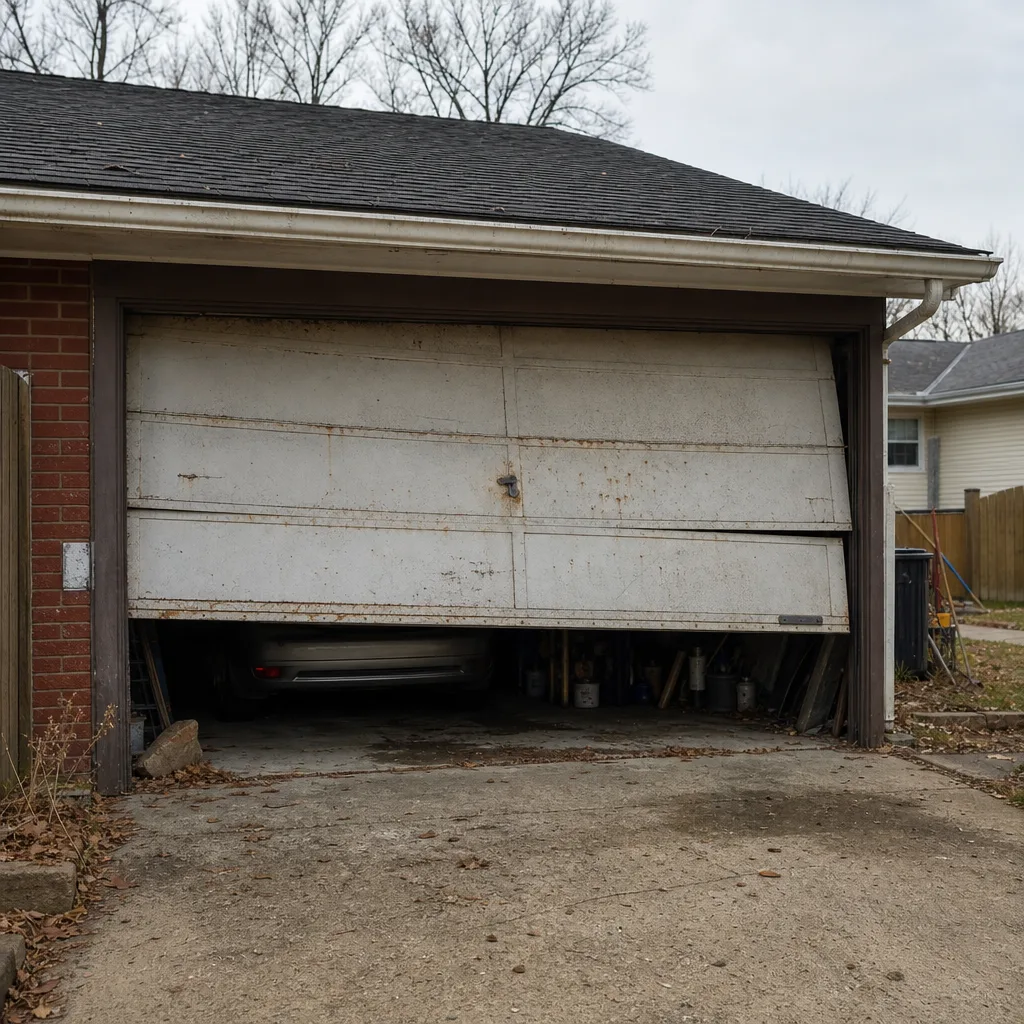
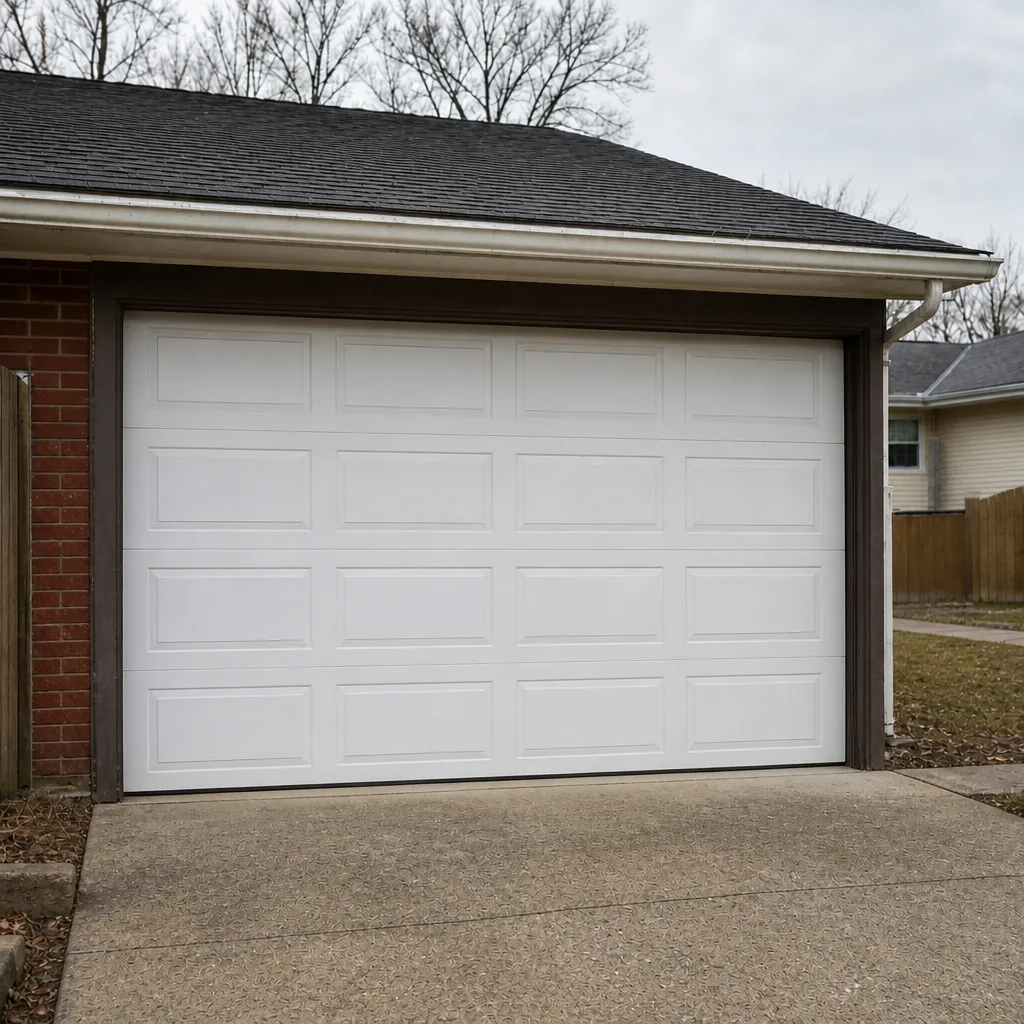
See the difference
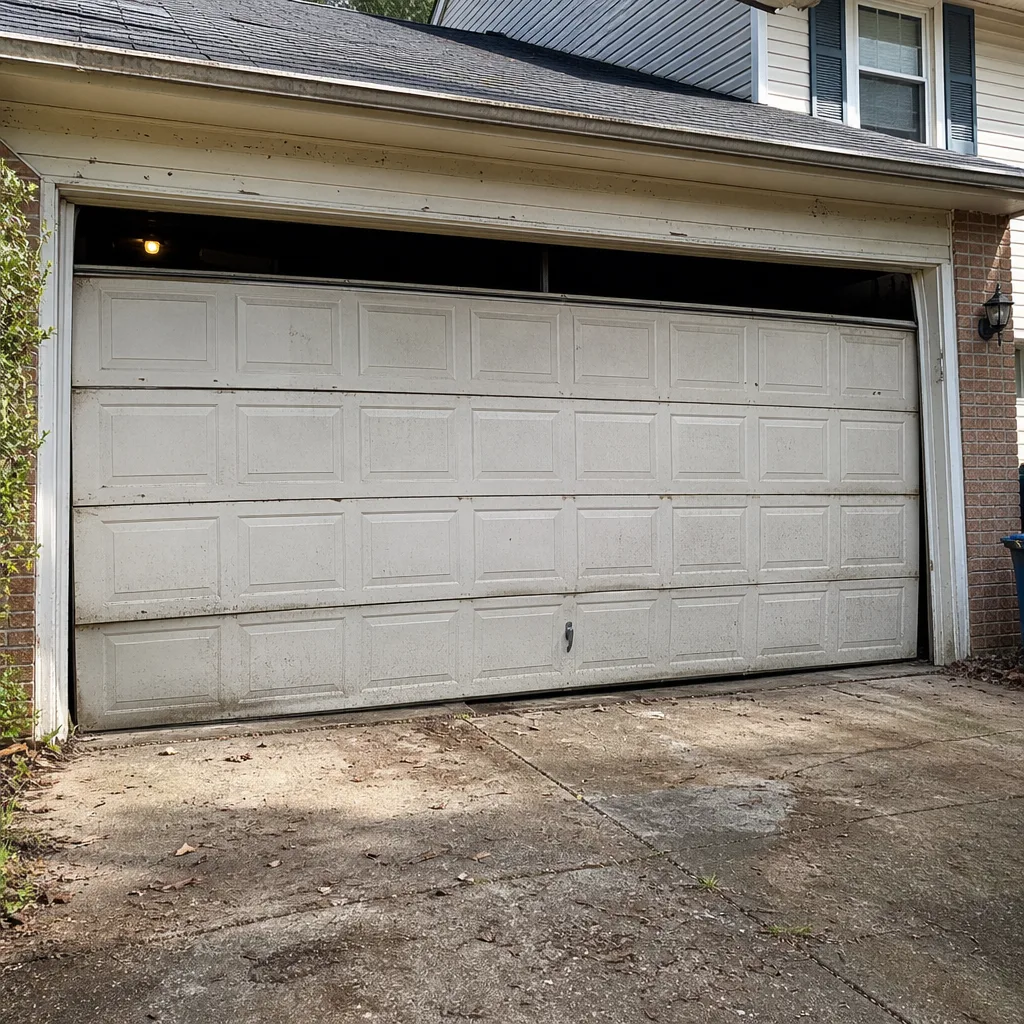 Before
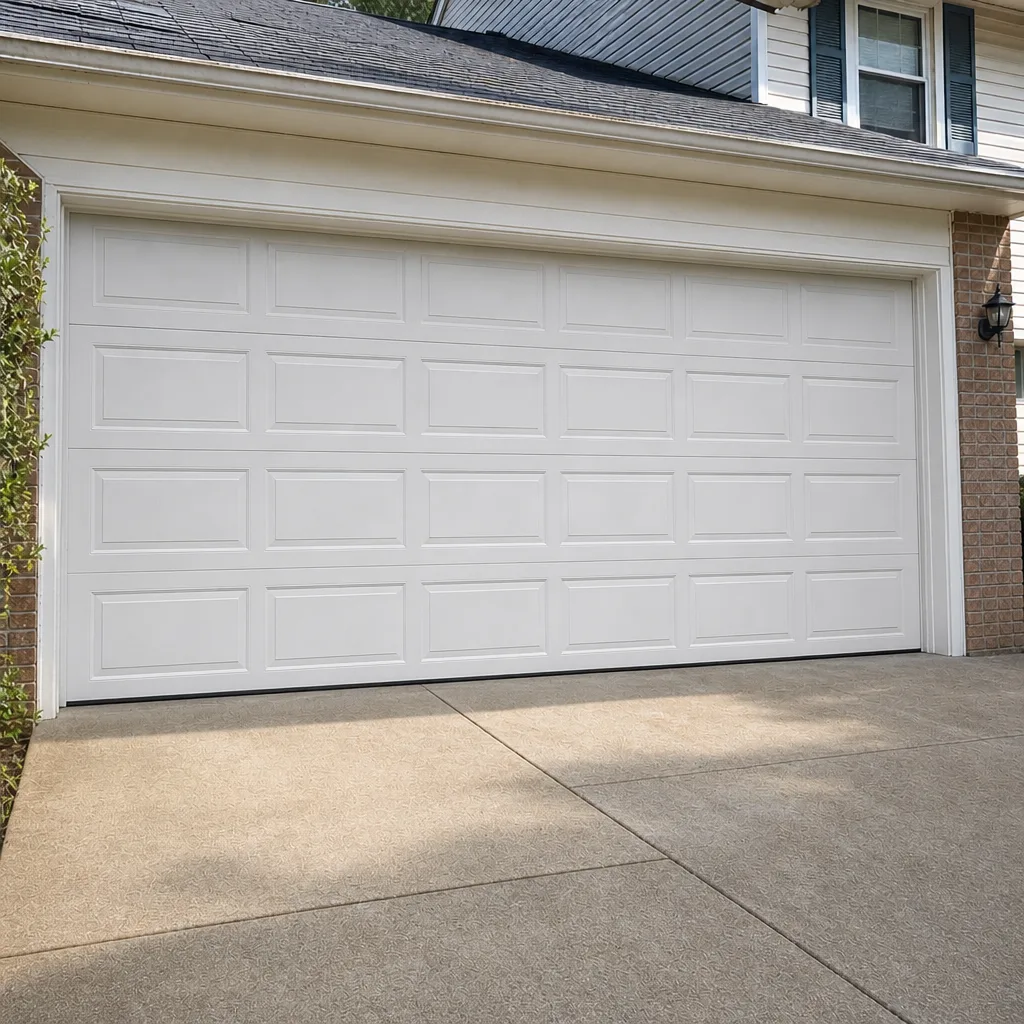 After
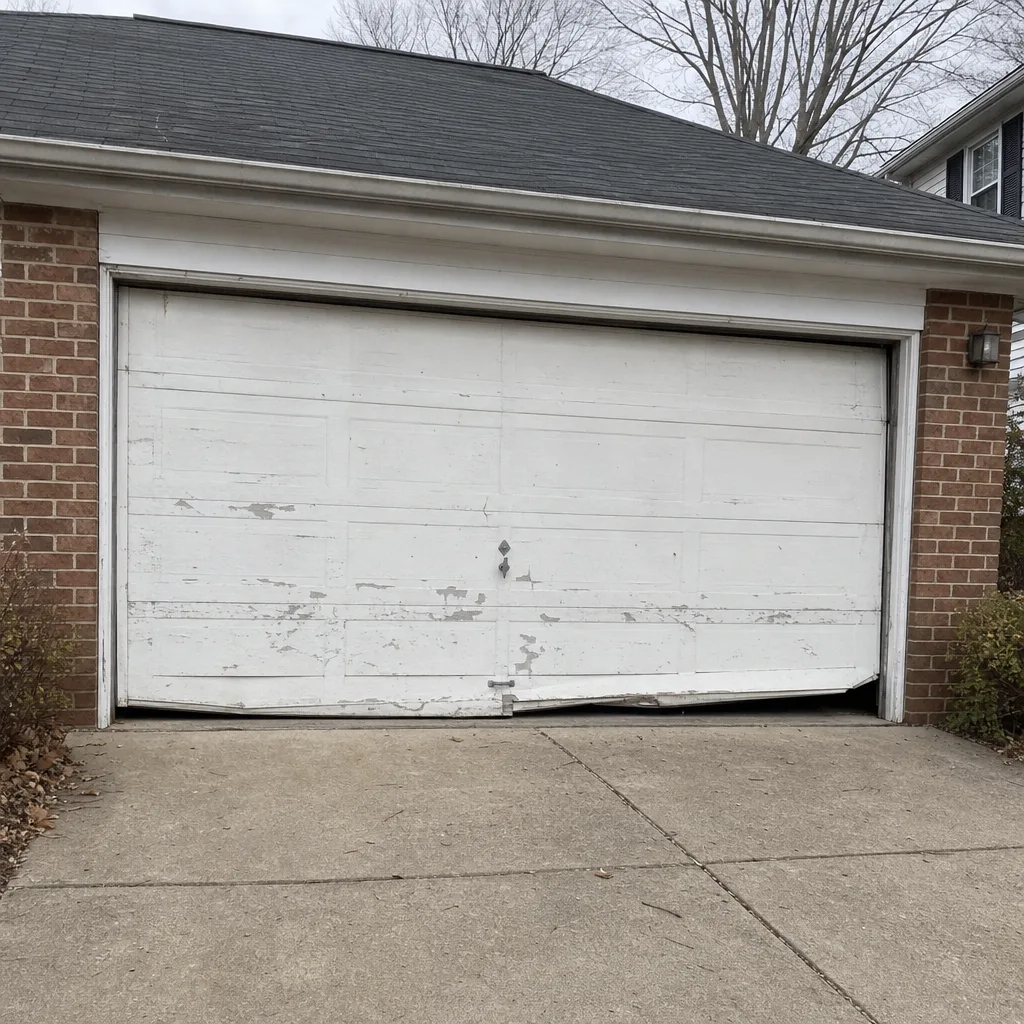 Before
 After
 Before
 After
When to Call a Professional
Most maintenance on a Gaithersburg door stays in the DIY column. These situations belong to a technician: any balance test that fails, any spring that looks stretched, broken, or noisy, any frayed cable strand, any track that’s bent or out of plumb, a door that reverses on its own, and an opener that clicks without moving. A door that’s stuck partly open, hanging crooked, or refusing to close at all is a call-today situation rather than a next-week one. We answer 24/7, and the local pro we connect you with is licensed and insured as their state requires. Same-day and emergency service is a real, standing offering, not a next-week appointment. We diagnose by brand, so your LiftMaster or Raynor door gets the right fix without a diagnostic detour. Free estimates, and the price is agreed in writing before any work starts.
Gaithersburg Garage Door Repair Pros offers free estimates in Gaithersburg – call (888) 891-0141.
Frequently Asked Questions
Twice a year at minimum, with one of those visits falling before the first hard freeze. The fall lubrication is the most important single task in the Gaithersburg climate, because cold metal contracts and a dry hinge can snap a cable in the same week your springs are already under maximum tension. The spring check and the safety reverse test should happen twice a year as well: once before winter, once after. Call (888) 891-0141 for an exact quote on anything the checklist turns up – estimates are free.
Spring fatigue, by a wide margin, on doors past the 10-year mark. Our freeze-thaw winters work the spring through thousands of cycle variations a year, and the spring is the part carrying the door’s full weight. The second most common is roller and bottom-seal wear, both accelerated by road salt runoff in winter and humidity in summer. If your door feels heavy at halfway, suspect the spring first.
No. Torsion and extension springs are under enormous tension, and a sudden release can cause serious injury. Even experienced handymen often decline spring work for that reason. If your balance test shows a spring problem, call (888) 891-0141 – spring repair is a specialty, and it’s done safely the first time.
Not always, but it’s urgent. An out-of-balance door loads your opener with weight it wasn’t built to lift, so every cycle shortens the opener’s life. If the door is stuck partway open, won’t close, or the cable has snapped, treat it as a same-day call. We answer 24/7, and fast dispatch runs 7am to 7pm, Sunday through Friday.
We’re closed on Saturday, but the phone is still answered. Call (888) 891-0141 and we’ll book you for Sunday, the next opening day. Fast dispatch from 7am to 7pm, Sunday through Friday. Don’t try to force the door open by hand in the meantime – if the spring has failed, forcing it puts strain on the cables.
No. The written estimate sets the final price, and the price is quoted and agreed before any work starts. If we find something during diagnosis that wasn’t in your description – a frayed cable, a worn hinge – we tell you before we touch it, and you decide. The written estimate is the number you pay.
The Bottom Line
A garage door checklist built for Gaithersburg has to follow the local year, not a generic national schedule. Lubricate before the first freeze, rinse salt off the bottom seal and lower track once winter ends, tighten fasteners and re-test balance through spring and summer, and inspect again before cold returns. Know which parts are on the clock: springs and rollers fail first on doors over 10 years old, while panels and tracks can last much longer with care. Run a balance test twice a year, and stop testing the moment it fails. Do the DIY-safe tasks yourself, and hand the springs and cables to a trained technician, because that’s where the real danger lives. If your checklist turns up a problem, or your door is stuck and can’t wait, call.
Call (888) 891-0141 for a free estimate. We answer 24/7. Fast dispatch from 7am to 7pm, Sunday through Friday. Same-day and emergency service is available, the local pro is licensed and insured as their state requires, and the price is agreed in writing before any work starts.
Written by the team at Gaithersburg Garage Door Repair Pros.